.jpg)
Why the Next Enterprise Platform is an Execution OS
Modern stacks deliver insight, not actions. Enterprises need an Execution OS.
Every generation of enterprise software solves one dominant problem.
The last decade solved data.
Enterprises centralized information, democratized access, automated analysis, and began embedding intelligence everywhere. Warehouses, BI, ML, workflows, and now AI agents reshaped how organizations see themselves.
On paper, the modern enterprise stack is extraordinary.
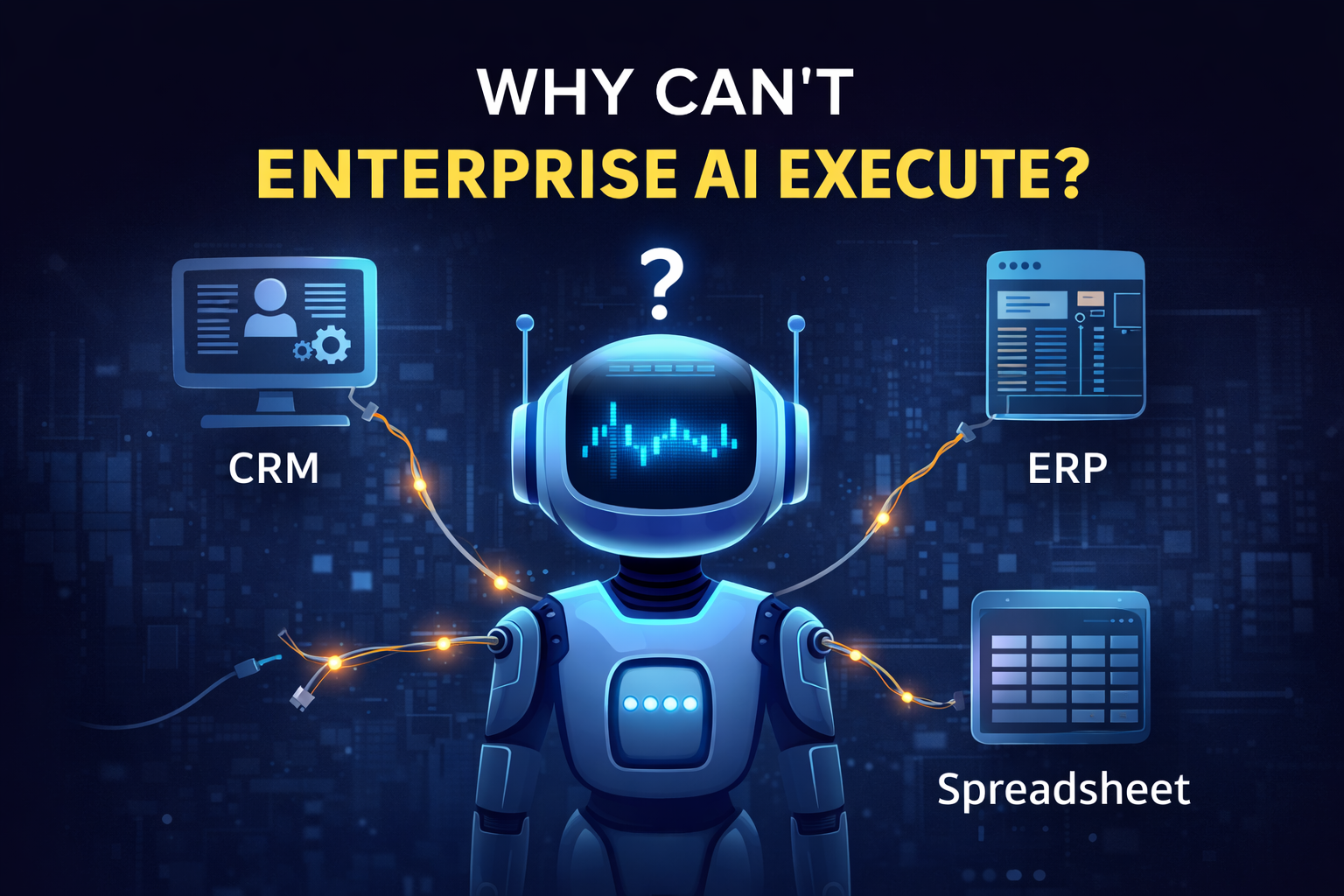
In reality, execution has never been more fragmented.
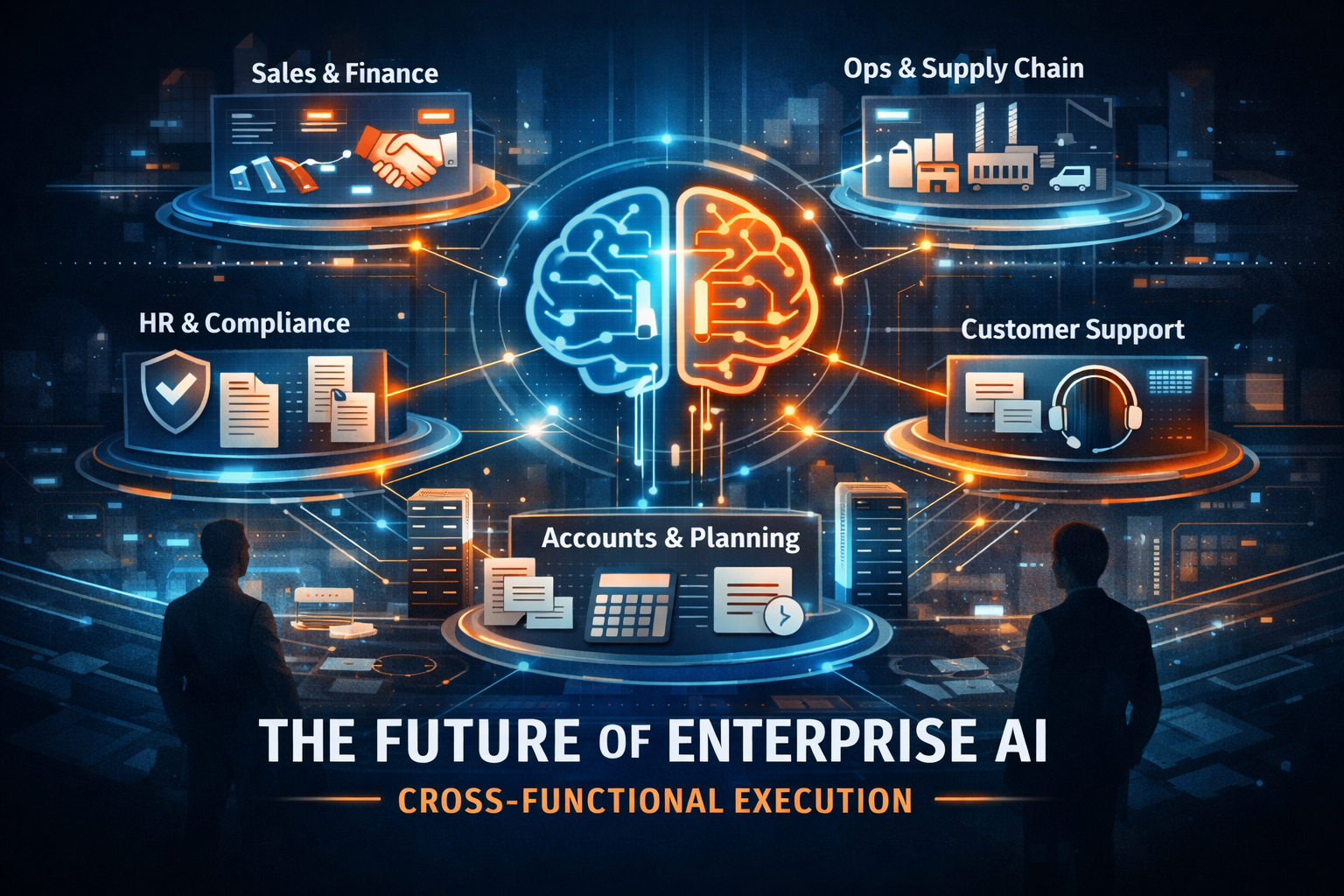
The more powerful the tools became, the more execution splintered. A single outcome: pricing a deal, managing risk, responding to a customer, now spans dashboards, models, workflows, approvals, and human judgment scattered across systems.
The issue was never a lack of capability.
It was the absence of an operating layer for execution.
Modernization gave us insight. It didn’t give us coherence.
Each layer of the modern stack delivered real progress:
- data platforms scaled storage and compute
- analytics made insight accessible
- models predicted what might happen next
- workflows automated what could be automated
- AI now reasons over what was previously unstructured
But these layers evolved independently.
Each became its own place where logic runs, permissions are enforced, and meaning is interpreted. Over time, enterprises didn’t just accumulate tools, they accumulated parallel realities of how the business works.
There is no single system that governs execution end to end.
What emerged is not tool sprawl, but execution sprawl, logic dispersed across technologies, teams, and moments in time.
The invisible tax on every enterprise: drift
This fragmentation creates two forms of drift that quietly tax every organization.
Semantic drift erodes shared understanding. The same business concept: revenue, exposure, risk, SLA, means different things depending on where it is computed or acted upon.
Execution drift erodes control. Rules evolve, exceptions multiply, and manual judgment fills the gaps. Over time, no one owns the full path from signal to decision to action.
Organizations don’t fail because they lack data.
They stall because they can no longer explain, or reliably repeat how decisions are made.
Why Systems of Record Are No Longer Enough
The great enterprise platforms of the last era became systems of record.
They answered a critical question:
What is the current state of the business?
But the modern enterprise runs on a different question:
Why did we act the way we did?
Systems of record store outcomes, not judgment. Transactions, not precedent. State, not execution.
As long as humans filled the gaps, this limitation was tolerable.
In the age of AI, it is existential.
Enterprises run on decisions, not data
The real engine of the enterprise is not data, it is decision-making.
Pricing exceptions. Risk overrides. Compliance waivers. Escalations. Approvals. Judgment applied in context.
These decisions draw from many systems, interpret policy, rely on precedent, and often require human authorization. And yet, almost none of this reasoning becomes durable, reusable, or observable.
Once the decision is made, the context disappears.
The organization forgets. And then relearns. Again and again.
AI makes execution the center of gravity
AI didn’t create this problem. It exposed it.
Agents don’t just analyze the world. They act on it.
They recommend, decide, approve, route, and commit changes to systems of record. That shifts the burden from understanding after the fact to governing at the moment of execution.
Dashboards live in the read path.
AI lives in the execution path.
Without a governing layer in that path, autonomy will always be fragile, powerful, but unsafe.
The next enterprise platform is an Execution OS
What the modern enterprise stack is missing is not another tool.
It is an Execution OS.
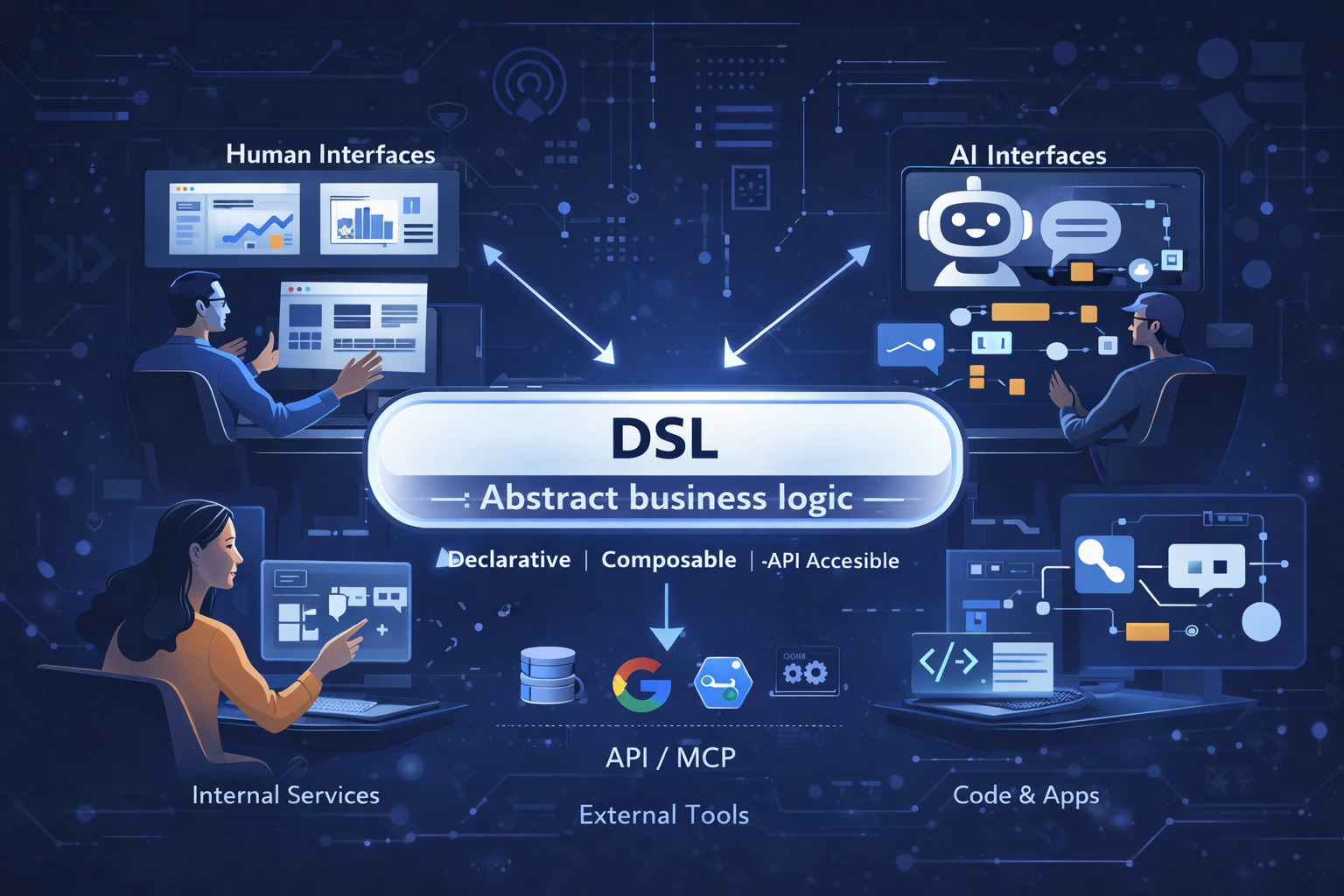
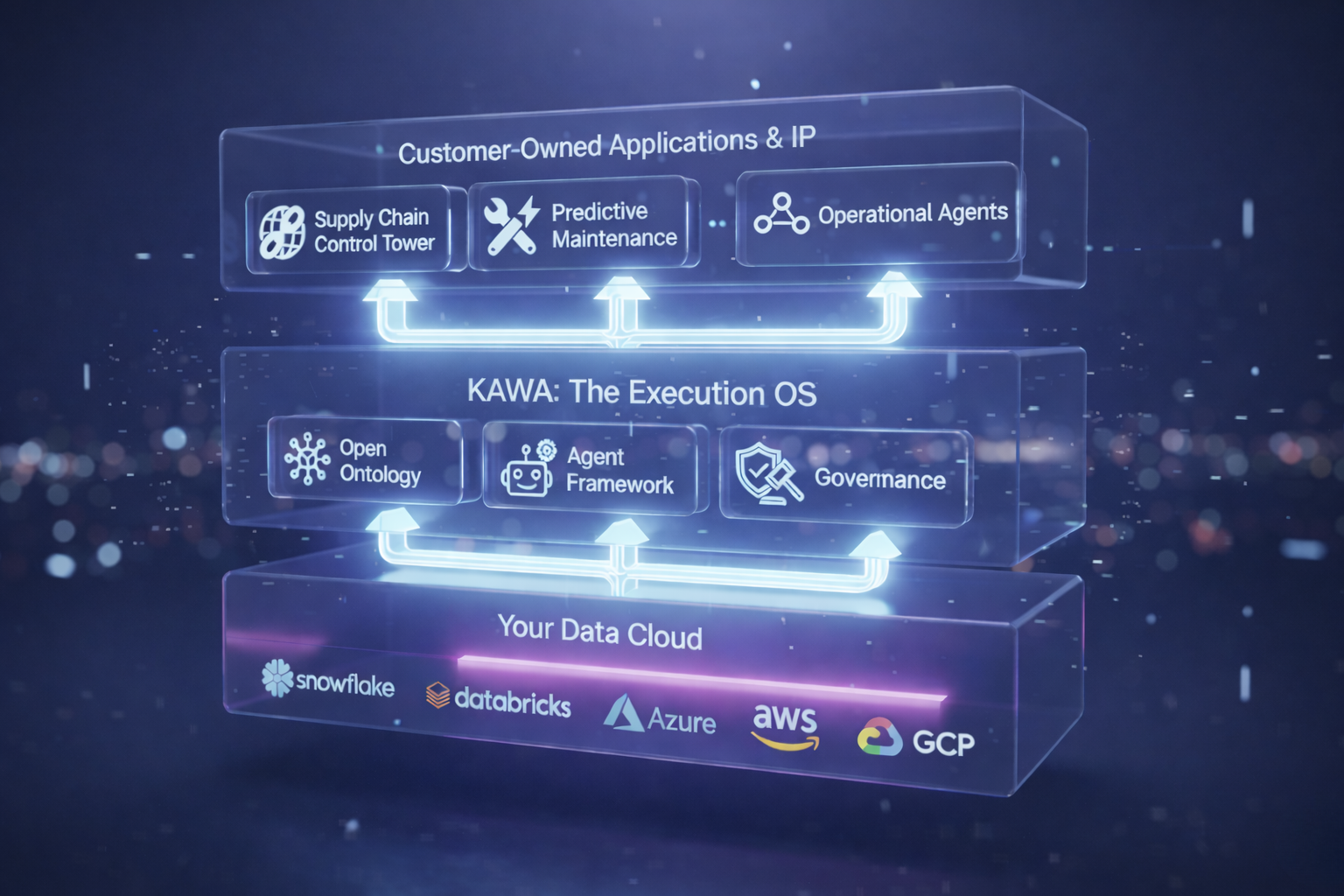
An Execution OS is the operating layer that turns insight into action, coherently and safely. It unifies business meaning, governs execution across systems, applies consistent permissions, and captures the reasoning behind every action as first-class data.
It doesn’t replace warehouses, analytics, or AI.
It makes them operate as one system.
For the first time, execution becomes observable, explainable, and repeatable.
Execution needs shared contracts
For execution to scale, four things must hold everywhere:
- One meaning: shared semantics across the stack
- One authority: consistent permissions and approvals
- One execution fabric: logic that runs end to end
- One memory: a durable record of why decisions were made
These are not implementation details.
They are the foundations of autonomy at enterprise scale.
Applications become executions
In the AI era, applications are no longer static interfaces.
They are governed executions.
A pricing engine.
A risk system.
A compliance workflow.
An autonomous agent that can act and explain itself.
When execution is unified, building an application means composing governed logic, not rewriting it. Intelligence stops being embedded in tools and starts living in the operating layer of the business itself.
Why we built KAWA
KAWA exists to make execution coherent.
Not by replacing the enterprise stack, but by giving it the operating layer it was missing.
KAWA is the Execution OS and control plane for how the business runs. Every action, exception, and approval leaves a trace: the data used, the rules applied, the policy in force, and the authority involved.
Over time, enterprises don’t just automate.
They develop institutional memory.
From data-driven to execution-driven
The last decade was about seeing the business clearly.
The next decade will be about running it deliberately.
Data and AI are no longer the differentiators. Execution is.
The companies that win will be the ones that can explain their decisions, automate them with control, and do it again deliberately, safely, and at scale.
Systems of record defined what the business was.
Execution systems will define what the business becomes.
That is the shift we’re entering.